
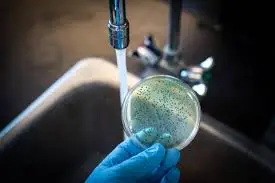
When people think about water testing, metals like lead and copper usually take center stage. These concerns are important—but they are only part of the picture.
In Jersey City homes and buildings, microbiological conditions can exist alongside chemical ones, and they require a completely different type of testing to understand.
That is why bacteria testing still belongs in every serious water program. Without it, a large part of the system’s behavior remains invisible.
Why Metals Alone Do Not Tell the Full Story
Metals testing focuses on how water interacts with plumbing materials. It helps answer questions about:
- Lead and copper presence
- Corrosion-related conditions
- Pipe material influence
But it does not address:
- Microbial activity
- Biological growth conditions
- Water stagnation effects
- Hygiene-related concerns
This means a metals-only approach leaves a major gap in understanding.
What Bacteria Testing Actually Measures
Microbiological analysis looks for indicators such as:
- Coliform bacteria
- E. coli
- Heterotrophic Plate Count (HPC)
These indicators do not all mean the same thing, but together they help describe:
- The biological condition of the water
- Whether bacteria are present
- How water behaves in low-flow or stagnant conditions
This adds a completely different dimension to water analysis.
Why Bacteria Behavior Is Different From Metals
Unlike metals, bacteria:
- Can grow under certain conditions
- May vary over time
- Respond to temperature and usage patterns
- Are influenced by stagnation and flow
This means results can change depending on when and where samples are collected.
Why Older Buildings Need Microbiological Attention
Many Jersey City properties include older plumbing systems, which can create conditions where bacteria testing becomes especially relevant.
Factors include:
- Aging pipes with internal buildup
- Sections of plumbing that are not regularly used
- Complex layouts with multiple branches
- Renovations that leave parts of the system unchanged
Understanding variation across Jersey City buildings helps explain why bacteria testing is not optional in these environments.
Why Underused Fixtures Can Influence Results
Bacteria are more likely to appear in areas where water sits for longer periods.
Examples include:
- Guest bathrooms
- Secondary sinks
- Utility fixtures
- Spaces with irregular use
In these cases:
- Water may stagnate
- Conditions may allow microbial growth
- Results may differ from frequently used fixtures
Why Irregular Use Patterns Matter
In both residential and multi-unit buildings, water usage is not always consistent.
This creates:
- Fluctuating flow conditions
- Periods of stagnation followed by heavy use
- Uneven distribution of water movement
These patterns directly affect microbiological conditions.
Why Bacteria Testing Complements Metals Analysis
When bacteria testing is combined with metals testing, it provides a more complete understanding of the system.
Together, they can show:
- Chemical interaction with plumbing
- Biological activity within the system
- Differences between fixtures and locations
- How usage patterns influence results
This combined approach is far more informative than either test alone.
Why Corrosion and Bacteria Can Be Connected
Although they measure different things, corrosion and bacteria can both be influenced by:
- Water chemistry
- Flow conditions
- Plumbing material
- System age
Understanding both helps create a more complete picture of water behavior.
Why Bacteria Results Require Careful Interpretation
A bacteria finding does not automatically mean there is a serious problem.
It must be interpreted in context:
- Where was the sample taken?
- How long had the water been sitting?
- Is the result consistent across locations?
- Are there patterns over time?
Without this context, results can be misunderstood.
How Certified Water Analysis Provides That Context
A structured approach to testing includes:
- Thoughtful fixture selection
- Consideration of usage patterns
- Inclusion of both chemical and microbiological parameters
- Interpretation of results as part of a whole system
Reliable water testing services are designed to provide this level of clarity.
Why High-Rise and Multi-Unit Buildings Add Complexity
In larger buildings, bacteria behavior can vary due to:
- Vertical plumbing systems
- Pressure zones
- Differences between units
- Varying occupancy levels
This makes microbiological testing even more important in these environments.
Why One Negative Result Does Not End the Conversation
Just as one positive result needs context, one negative result does not guarantee future stability.
Bacteria conditions can change due to:
- Seasonal variation
- Changes in water use
- Plumbing modifications
- Building occupancy shifts
This is why bacteria testing is often part of an ongoing water program rather than a one-time check.
Why Water Quality Problems Require a Broader View
Bacteria is just one part of water quality.
Other factors may include:
- Metals and corrosion
- Chemical contaminants
- General water chemistry
- System-specific conditions
Understanding broader water quality problems helps place microbiological results into perspective.
Why Homeowners and Managers Benefit From Including Bacteria Testing
Including microbiological analysis helps:
- Identify conditions not visible through metals testing
- Understand how usage patterns affect water
- Reduce uncertainty about biological factors
- Create a more complete water profile
This leads to better-informed decisions.
Why Testing Must Reflect Real Use Conditions
To get meaningful bacteria results, testing should consider:
- Frequently used fixtures
- Low-use or stagnant areas
- Timing of sampling
- Building-specific usage patterns
Without this, results may not represent actual conditions.
Why Local Expertise Improves Interpretation
Working with a provider familiar with Jersey City ensures:
- Sampling reflects real building environments
- Results are interpreted with local context
- Testing plans match property type and use patterns
- Guidance is practical and relevant
Checking service locations helps confirm coverage.
If additional clarification is needed, the FAQ section offers explanations of common testing results.
Moving Toward a Complete Water Program
A serious water program does not focus on one issue at a time. It considers:
- Chemical conditions
- Biological conditions
- Plumbing behavior
- Real-world usage patterns
Bacteria testing is a key part of that complete approach.
Final Thoughts
Metals may dominate public attention, but they do not define water quality on their own.
Microbiological conditions play an equally important role in understanding how water behaves inside a home or building.
That is why bacteria testing remains essential.
Because in Jersey City properties, a truly reliable water analysis is not the one that tests the most obvious concern—it is the one that captures everything that could meaningfully affect the water people use every day.