
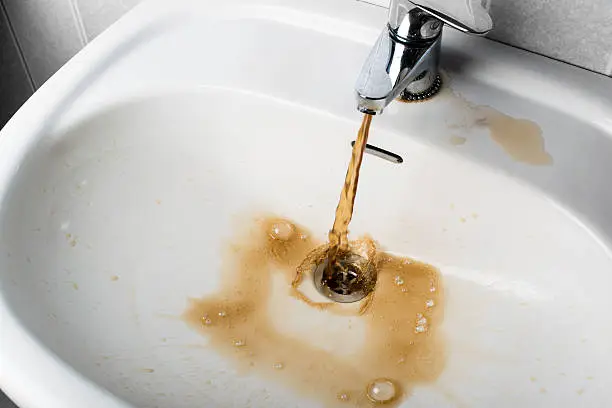
Brown water is one of the most noticeable water issues a household can experience. It appears suddenly, often without warning, and immediately raises concern.
In Jersey City homes and buildings, many people are told not to worry—that it’s temporary, harmless, or just part of normal system behavior.
Sometimes that is true.
But not always.
The real issue is that brown water is a signal, not an explanation. And brushing it off too quickly can mean missing what the system is actually trying to show.
Why Brown Water Gets Dismissed So Easily
When discoloration appears, common reactions include:
- “It will clear up on its own”
- “It’s just from the pipes”
- “It happens after maintenance work”
- “It’s not a big deal if it goes away quickly”
While these explanations may apply in some cases, they are assumptions—not confirmed answers.
Without proper evaluation, it is impossible to know which explanation is correct.
What Brown Water Usually Indicates
Brown or discolored water typically points to one or more of the following:
- Iron presence in the system
- Sediment movement within pipes
- Disturbance from plumbing or infrastructure changes
- Corrosion-related conditions inside the system
Each of these causes has a different meaning and level of importance.
Why Iron Is Often Part of the Picture
Iron is one of the most common contributors to brown water.
It can:
- Create a reddish or brown tint
- Appear suddenly after water movement
- Settle and reappear when disturbed
- Vary depending on usage patterns
Iron-related discoloration is often visible, but its cause may still require confirmation.
How Sediment Movement Creates Temporary Changes
Sediment inside pipes can shift due to:
- Changes in water flow
- Pressure fluctuations
- System maintenance or nearby work
- Increased demand during certain times
When sediment moves, it can temporarily discolor water. However, repeated occurrences may suggest deeper system behavior.
Why Plumbing Disturbance Matters
Any change in the plumbing system can affect water appearance.
This includes:
- Repairs or replacements
- Valve adjustments
- Nearby construction or utility work
- Internal system changes within the building
Disturbances can loosen material inside pipes, leading to visible changes at the tap.
Why Corrosion Conditions Should Not Be Ignored
Corrosion plays a key role in how water interacts with plumbing.
It can:
- Release particles into the water
- Influence metal behavior
- Change over time depending on conditions
- Affect different parts of the system differently
Understanding corrosion helps explain whether brown water is a surface issue or something more technical.
Why One Event May Not Tell the Full Story
A single instance of brown water does not always indicate a long-term problem.
However, patterns matter:
- Does it happen repeatedly?
- Does it affect multiple fixtures?
- Does it appear at certain times of day?
- Does it follow plumbing or system changes?
Without tracking these patterns, it is difficult to interpret what the discoloration means.
Why Different Fixtures May Show Different Results
Not all taps in a home or building behave the same way.
Differences can occur because:
- Fixtures connect to different plumbing lines
- Some areas experience more stagnation
- Usage patterns vary between rooms
- Renovations may have changed certain sections
This means brown water may appear in one location but not another.
Why Jersey City Buildings Add Complexity
Water behavior in Jersey City is often influenced by building conditions.
Many properties include:
- Older plumbing infrastructure
- Mixed materials from partial upgrades
- Multi-unit systems with shared lines
- High-rise buildings with vertical distribution
These factors can create variation in how and where discoloration appears.
Understanding how systems differ across Jersey City buildings helps explain why brown water is not always straightforward.
Why Appearance Alone Cannot Explain the Cause
While brown water is visible, its cause is not.
The same appearance could result from:
- Temporary sediment disturbance
- Ongoing corrosion inside pipes
- Localized plumbing issues
- System-wide changes
This is why visual observation needs to be supported by actual analysis.
How Certified Water Analysis Provides Clarity
Professional testing helps determine what is actually happening.
It can identify:
- Whether iron or other metals are present
- If corrosion indicators are contributing
- Whether the issue is localized or widespread
- If additional factors are involved
Reliable water testing services provide structured data that replaces assumptions with measurable results.
Why Brown Water Can Be Cosmetic—or Not
Some discoloration events are primarily cosmetic, meaning:
- They are temporary
- They do not indicate ongoing system issues
- They resolve without further action
Others may point to:
- Repeated sediment movement
- Corrosion-related conditions
- Plumbing system concerns
- Infrastructure-related factors
Testing helps determine which category applies.
Why Timing and Usage Patterns Matter
Brown water may appear under specific conditions:
- After periods of low use
- During high-demand times
- Following plumbing work
- At certain times of day
Understanding these patterns helps interpret whether the issue is isolated or recurring.
Why Residents Should Ask Better Questions
Instead of accepting quick explanations, it helps to ask:
- What caused this discoloration?
- Is it likely to happen again?
- Does it affect only one fixture or the whole system?
- Should testing be considered?
Better questions lead to clearer answers.
Why Water Quality Problems Need Context
Brown water is just one part of a larger picture.
Other issues may include:
- Metal presence in water
- Bacteria concerns
- Chemical contaminants
- General water stability
Understanding broader water quality problems helps place discoloration into context.
Why Dismissing the Issue Can Delay Understanding
Ignoring brown water without investigation can:
- Delay identification of recurring problems
- Miss patterns that develop over time
- Lead to repeated confusion with each occurrence
- Reduce confidence in the water system
Even if the issue turns out to be minor, confirmation is valuable.
When It Makes Sense to Investigate Further
Further evaluation is especially useful when:
- Brown water appears repeatedly
- Multiple fixtures are affected
- The issue follows plumbing work
- There is uncertainty about the cause
Why Local Testing Access Matters
Working with a local provider ensures:
- Sampling reflects real building conditions
- Results are interpreted within local context
- Testing plans match Jersey City property types
- Guidance is practical and relevant
Checking service locations helps confirm availability in Jersey City.
If additional clarification is needed, the FAQ section provides answers to common water concerns.
Final Thoughts
Brown water is one of the clearest signs that something in the system deserves attention—but it is not a diagnosis on its own.
In Jersey City homes and buildings, discoloration can come from several different causes, each with its own meaning and level of importance.
The key is not to assume or dismiss, but to understand.
Because when it comes to water quality, the smartest response is not to ignore what you can see, but to use it as a starting point for finding out what you cannot.