
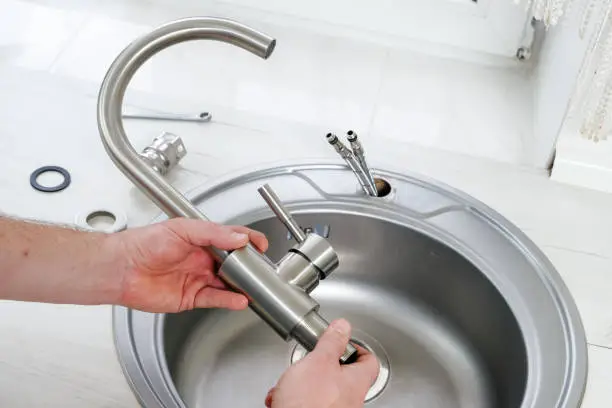
A newly renovated kitchen or bathroom often feels like a complete reset. Fresh fixtures, modern finishes, and updated layouts create the impression that everything behind the walls has been upgraded as well.
In many Paulus Hook properties, that is not entirely true.
Renovations frequently update visible elements—sinks, faucets, and short sections of plumbing—while leaving deeper infrastructure untouched. As a result, the water reaching the tap may still be influenced by older systems that remain in place.
This creates a situation where the appearance of the space suggests something new, but the water behavior may still reflect a mix of old and new conditions.
Why Renovation Does Not Equal Full Plumbing Replacement
Most residential renovation projects focus on:
- Fixtures such as sinks and faucets
- Short branch lines near the point of use
- Accessible plumbing sections within walls or cabinets
What often remains unchanged:
- Main supply lines
- Vertical risers in multi-unit buildings
- Hidden infrastructure behind structural elements
- Shared systems serving multiple units
This means new fixtures are frequently connected to older plumbing systems that continue to influence water quality.
How Mixed Plumbing Systems Affect Water Behavior
When newer materials are connected to older ones, the system becomes a combination of:
- Different pipe materials
- Different ages of installation
- Different wear and corrosion conditions
This mix can affect:
- How water interacts with surfaces
- How metals behave in the system
- How consistent results are across fixtures
- How water changes over time
The final water profile is shaped by the entire system—not just the newest part.
Why New Fixtures Can Change Water Interaction
Even when underlying infrastructure remains the same, new fixtures can still influence water behavior.
Changes may include:
- Different internal materials in faucets
- Altered flow rates
- New connection points
- Modified stagnation patterns
These changes can subtly shift how water interacts with the plumbing before reaching the tap.
Why Renovation Can Introduce Temporary Changes
After renovation work, it is not uncommon for water behavior to shift temporarily due to:
- Disturbance of existing pipes
- Movement of sediment within the system
- Changes in flow direction or pressure
- Introduction of new materials
Some of these effects resolve over time, while others may persist depending on system conditions.
Why Lead and Copper Should Be Re-Evaluated After Renovation
Renovation can change how metals behave in the system.
Even if previous conditions were stable:
- New connections may alter corrosion behavior
- Different materials may interact in new ways
- Water chemistry may respond differently at the fixture
Testing helps determine whether these changes have affected lead or copper levels.
Why Corrosion Conditions May Shift
Corrosion is influenced by the relationship between water and plumbing materials.
Renovation can affect this relationship by:
- Introducing new materials into the system
- Changing flow patterns
- Altering how long water sits in certain lines
These shifts may not be visible, but they can influence test results.
Why One Updated Room Does Not Represent the Entire Property
A newly renovated kitchen does not necessarily reflect conditions in:
- Bathrooms that were not updated
- Utility sinks or secondary fixtures
- Other units in a multi-unit building
- Shared plumbing systems
Each location may still behave differently depending on its connection to the system.
Understanding how variation exists across Jersey City buildings helps explain why renovation does not create uniform results.
Why Testing After Renovation Provides Valuable Insight
Post-renovation testing helps answer key questions:
- Did the renovation change water quality at the tap?
- Are results consistent across updated and non-updated areas?
- Has plumbing interaction shifted in any way?
- Are conditions stable or still adjusting?
Without testing, these questions remain unanswered.
How Certified Water Analysis Captures the Full Picture
A comprehensive analysis may include:
- Metals such as lead and copper
- Corrosion-related indicators
- General water chemistry and potability markers
- Additional parameters depending on the situation
This broader scope helps connect renovation changes to actual water behavior.
Structured water testing services provide this level of detail rather than focusing on a single concern.
Why Fixture-Level Testing Becomes More Important After Renovation
Because renovations often affect specific areas, testing should consider:
- Newly updated fixtures
- Older fixtures still in use
- High-use vs low-use locations
- Different rooms or sections of the property
This approach helps identify whether changes are localized or more widespread.
Why Appearance Alone Can Be Misleading
After renovation, water may:
- Look completely normal
- Show no obvious signs of change
- Taste slightly different without clear explanation
These observations do not confirm whether underlying conditions have changed.
Only testing can provide that level of clarity.
Why Paulus Hook Properties Require Special Attention
Paulus Hook includes many properties with:
- Historic construction combined with modern updates
- Multi-unit buildings with shared systems
- Layered renovation history over time
- Mixed plumbing materials within the same structure
These characteristics make it especially important to evaluate water conditions after any change.
Why Water Quality Problems Need Context
Renovation is just one factor that can influence water behavior.
Other considerations include:
- Existing plumbing conditions
- Building-wide system characteristics
- Usage patterns across units
- External supply factors
Understanding broader water quality problems helps place renovation-related changes into context.
Why Homeowners Should Not Assume Stability
Even if water appears normal after renovation, assumptions can lead to missed insights.
It is possible for:
- Subtle changes to go unnoticed
- Conditions to evolve over time
- Differences between fixtures to remain hidden
Testing provides confirmation rather than assumption.
Why Local Testing Support Matters
Working with a provider familiar with Jersey City ensures:
- Sampling reflects real building conditions
- Testing plans match property type and renovation scope
- Results are interpreted with local context
- Guidance is relevant to Paulus Hook properties
Checking service locations helps confirm availability.
If questions arise, the FAQ section offers helpful explanations about testing and results.
Turning Renovation Into an Opportunity for Better Understanding
Instead of viewing renovation as the end of a project, it can also be seen as a starting point for:
- Re-evaluating water conditions
- Establishing a new baseline
- Understanding how changes affect daily use
- Making informed decisions moving forward
Final Thoughts
Renovation changes what you can see—but it does not always change everything behind the scenes.
In Paulus Hook properties, new fixtures and updated spaces often connect to older infrastructure that continues to shape the water at the tap.
Certified water analysis helps reveal whether those hidden connections are influencing water quality in meaningful ways.
Because in real homes, the true impact of renovation is not just how a space looks, but how the system behind it continues to perform every time the water runs.